

Summer Care for Rescue Horses in Central Oregon
Summer at Broken Arrow Ranch & Sanctuary brings long days, bright skies, and a different rhythm across the land. It also brings a higher level of attention to the herd’s daily comfort. Water matters more. Shade matters more. Pasture conditions can shift quickly. Insects pick up. Smoke becomes part of the seasonal picture in Oregon. This year, those concerns feel even more real as drought conditions continue across the state.
At the sanctuary, summer care is shaped around the needs of the animals in front of you. A senior horse may need extra nourishment. A more sensitive horse may need closer observation during heat or smoke. A herd with a hard past may thrive most when life stays steady, quiet, and predictable.
Summer Care Starts with the Individual
Every horse, burro, and mule carries a different story, which means each one moves through summer a little differently too.
Shasta is a great example. As one of Broken Arrow’s senior horses, she benefits from extra nutritional support beyond forage alone. She gets her own grain time twice a day, along with the kind of calm, one-on-one attention that supports her aging body. That daily routine says a lot about what sanctuary care really means. It means paying attention. It means meeting each animal where they are. It means recognizing that comfort can look a little different from one horse to the next.
That same care extends across the herd. Beauty’s herd includes 16 equines, and 14 of them came from kill pens. Many arrived carrying fear, strain, and uncertainty. A few were foals when they first entered that chaos. Today, they graze, rest, play, and move through the land with more ease. Summer care helps support that continued healing through routine, nourishment, observation, and the freedom to settle into safer patterns of life.
Water, Shade, and the Quiet Work of Paying Attention
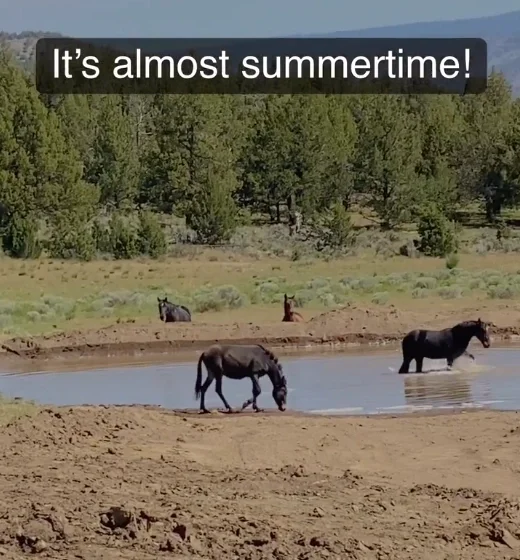
Throwback to June 2023 when we surprise Shiloh’s herd with another pond!
When temperatures rise, hydration becomes one of the biggest priorities. Horses lose a great deal of fluid through sweat in hot weather, which is why clean water, regular checks, and close observation are such an important part of summer care. Shade and airflow help too, especially during long hot stretches.
This kind of care rarely looks dramatic. It looks like troughs being checked again. It looks like watching how much the herd is drinking. It looks like noticing when one horse seems a little slower, a little warmer, or a little less comfortable than usual.
That quiet attention is part of what helps horses stay safe through the summer.
The Land Shapes the Season Too
In Central Oregon, summer care is tied closely to the landscape. Dry conditions affect forage, water, and pasture use. This year’s drought outlook across Oregon is a reminder that animal care and land care are deeply connected, especially in a high desert environment.
At Broken Arrow, that connection is part of the mission. Caring for rescued equines also means caring for the ground beneath them. Watching pasture conditions, responding to what the season brings, and supporting the long-term health of the land all help create a more stable home for the herd.
Summer Insects Bring More Than Irritation
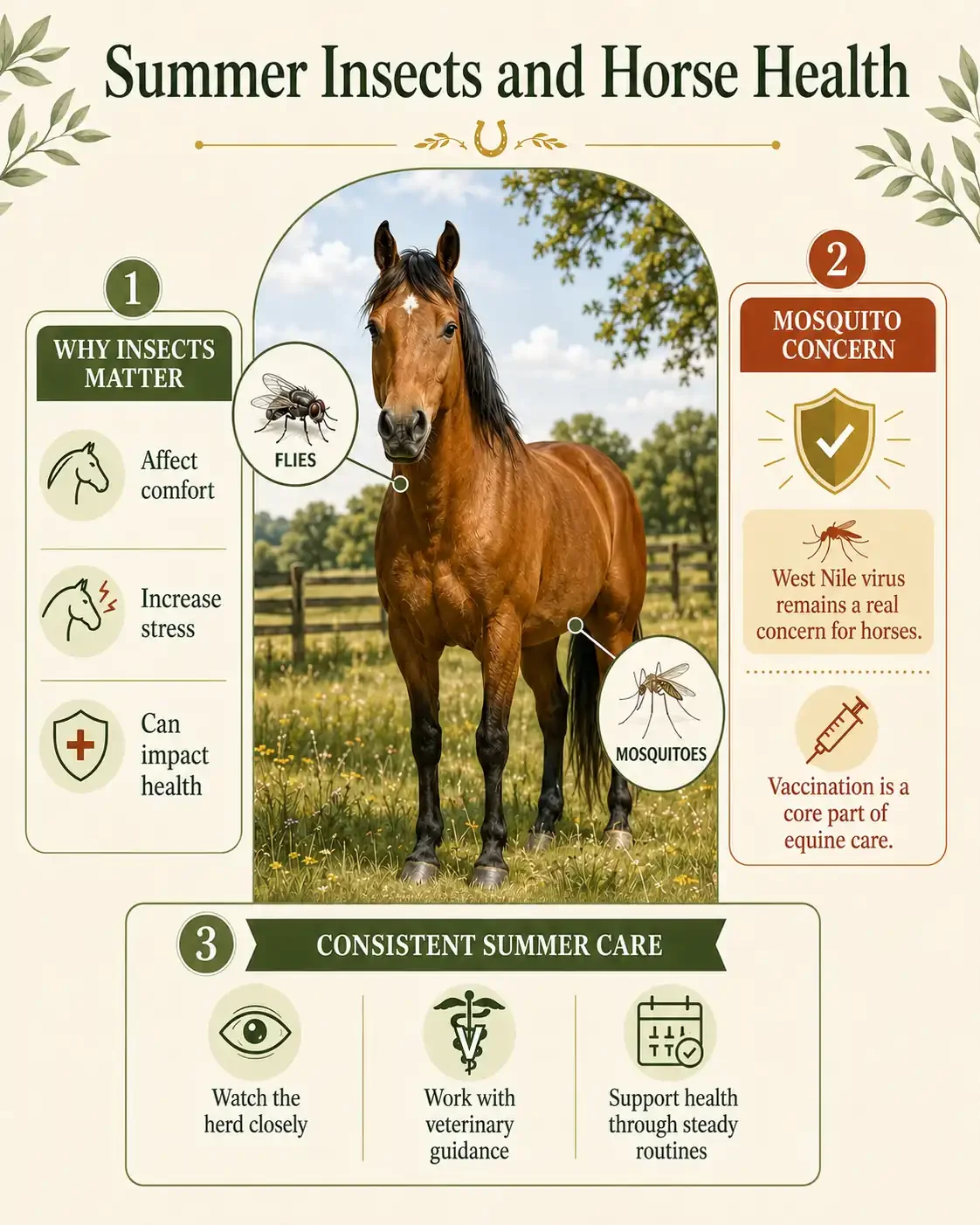
Flies and mosquitoes are part of summer life, but they are more than a nuisance. They affect comfort, stress, and health. Mosquitoes are especially important to keep in mind because West Nile virus remains a real concern for horses, and it continues to be considered a core vaccine issue in equine care.
This is one more reason summer care asks for consistency. Seasonal care includes staying ahead of issues before they grow, whether that means watching the herd more closely, working with veterinary guidance, or supporting overall health through stable routines.
Smoke Readiness Is Part of Oregon Summer
Here in Oregon, summer can also bring wildfire smoke. That affects livestock too, including respiratory comfort and overall stress during smoky periods. Preparing for smoke season is part of responsible summer care across the region.
That kind of planning may never be the most visible part of sanctuary life, but it matters. It is part of the same daily commitment that shows up in water checks, feeding routines, and careful observation of the herd.
What Summer Care Really Looks Like
Summer care at Broken Arrow Ranch & Sanctuary is built from small, faithful acts repeated every day.
It is making sure Shasta gets the support she needs. It is walking the fence line and watching a herd like Beauty’s settle into healthier rhythms. It is checking water, watching pasture conditions, and staying alert to heat, insects, and smoke. It is knowing that rescued horses, burros, and mules do best when care is steady, thoughtful, and shaped around who they are.
That is part of the beauty of sanctuary. Healing continues in the ordinary moments. Strength returns through routine. Trust grows in the quiet.
How You Can Support the Herd This Summer
Summer is beautiful at the sanctuary, and it also asks a great deal of the people caring for the herd. Water systems need attention. Feeding routines matter. The land needs watching. Every animal carries individual needs into the season.
When you follow Broken Arrow, share the sanctuary’s mission, sign up for updates, or make a donation, you help support that daily care. You help make room for the kind of steady, grounded sanctuary that allows horses, burros, and mules to keep healing.
Sources
Oregon drought and water conditions: https://www.oregon.gov/OWRD/programs/climate/droughtwatch/Pages/default.aspx
Hot weather horse care and water guidance: https://extension.umn.edu/horse-care-and-management/caring-horses-during-hot-weather
West Nile guidance for horses: https://aaep.org/resource/west-nile-virus-vaccination-guidelines/
Wildfire smoke and livestock: https://extension.oregonstate.edu/catalog/pnw-783-wildfires-smoke-livestock-what-can-we-do