

What Happens After a Horse Is Rescued? See the Journey Through Before-and-After Photos
When people hear that a horse has been rescued, it can sound like the story is over. In reality, rescue is often only the beginning.
At Broken Arrow Ranch & Sanctuary, horses, burros, and mules who were once at risk are given the chance to begin again. Some arrive underweight. Some come from harmful conditions. Some have been moved from uncertain situations more than once. What they need most is not just removal from danger, but time, safety, consistency, and a place to finally settle.
Rescue Is the First Step, Not the Finish Line
A rescue can save an animal from immediate harm, but healing does not happen all at once. Horses need steady care, appropriate nutrition, room to decompress, and the chance to build trust at their own pace.
That is part of what makes sanctuary so important. The goal is not simply short-term intervention. True sanctuary provides a lasting refuge where horses can live with dignity, form bonds within the herd, and experience the stability that many of them have never fully known before.
What Healing Can Look Like Over Time
Every horse’s story is different, but the healing process often includes several important stages.
Physical Recovery
Some rescued horses arrive in poor body condition and need careful monitoring as they regain weight and strength. Recovery can take time, especially when a horse has gone without the nutrition, routine, or safety needed to thrive.
Improvement may show up first in small ways: a steadier posture, a calmer expression, a healthier coat, or gradual weight gain. Over time, those small changes begin to tell a much larger story.
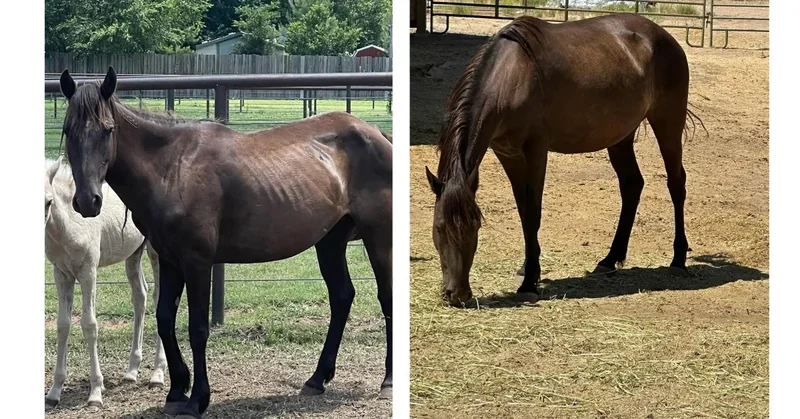
Before and after: Black Pearl
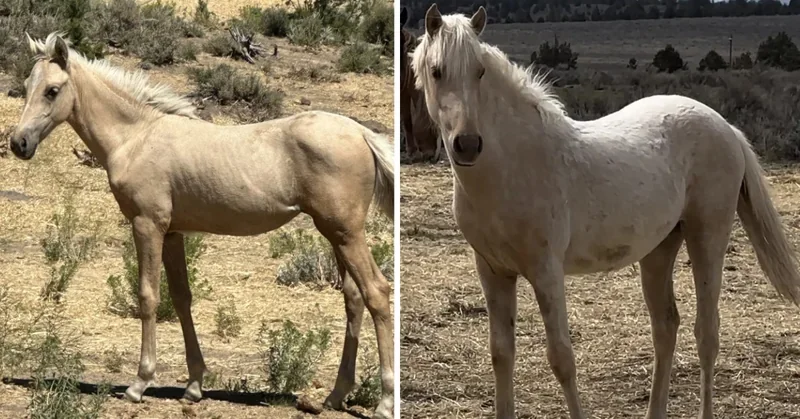
Before and after: Colibri
Emotional and Social Adjustment
Healing is not only physical. Horses are herd animals, and their sense of safety is closely tied to the environment around them. Some need time to learn that food will come regularly. Some need space before they feel comfortable around people. Some find stability through the presence of other horses.
Trust often returns quietly. It can look like a horse beginning to relax near the herd, responding with less fear, or showing curiosity instead of stress. These changes matter just as much as the visible ones.
The Gift of Permanence
For many rescued equines, what matters most is not speed but permanence. A safe, long-term home allows healing to unfold without pressure. It gives animals the chance to settle into routines, relationships, and a landscape that supports their well-being.
Recovery is rarely a straight line. Stability gives horses the space to simply be horses.
Before-and-After Photos Tell Only Part of the Story
Before-and-after images can be powerful. They help people see visible changes in weight, posture, coat condition, and expression. They show progress that is worth celebrating.
But they do not always capture the full story. What those photos cannot always show is the daily work behind the scenes: feeding in every season, observing herd dynamics, making room for rest and movement, and showing up again and again for animals who need consistency more than anything else.
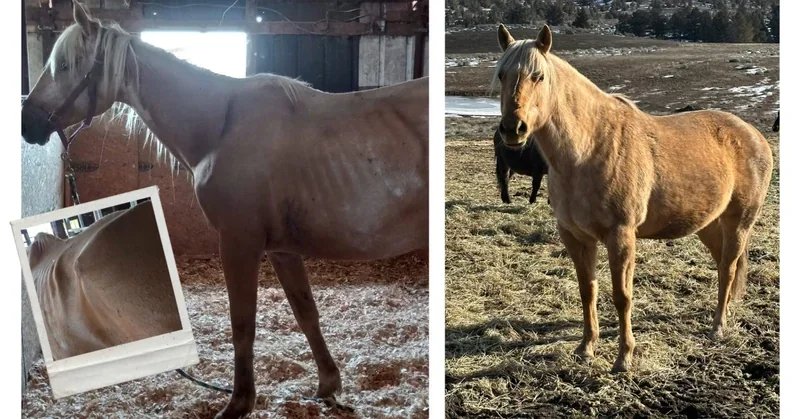
Before and after: Bree
Why Sanctuary Matters in Oregon
In Central Oregon, a true sanctuary offers more than temporary protection. It offers room, routine, and a setting where equines can live with dignity. Long-term sanctuary supports the full road after rescue: daily care, nutritional support, safe land, and the chance to heal over time.
For supporters, that means a donation helps make possible much more than a single rescue moment. It supports the care that comes after, when safety must become stability and stability must become home.
Every Rescue Story Continues
It is easy to think of rescue as a single event. In truth, it is a long process made up of many small acts of care.
A horse is rescued. Then the waiting begins. Then the nourishment. Then the quiet. Then the first signs of trust. Then the steady return of strength. Then, over time, a life that starts to look less like survival and more like home.
That is the work of sanctuary.
If you would like to support the care of horses, burros, and mules who now have the chance to live safely and with dignity, we invite you to follow along, share their stories, sign up for updates, or make a donation to support the herd.
FAQ
What happens after a horse is rescued?
After rescue, a horse often needs ongoing care that may include nutrition support, veterinary attention, monitoring, herd integration, and time to decompress in a safe environment. True recovery usually happens over time, not overnight.
How long does it take a rescued horse to recover?
There is no single timeline. Some horses show visible improvement in weeks, while others need much longer to regain physical condition, trust, and stability. Recovery depends on the horse’s condition, history, and environment.
Why are before-and-after photos important in horse rescue?
Before-and-after photos help show the visible impact of rescue and long-term care. They can highlight physical changes, but they also point to the less visible work of daily support, patience, and sanctuary.
Why does long-term sanctuary matter?
Rescue removes immediate danger. Sanctuary provides the long-term stability that allows healing to continue. For many equines, that lasting sense of safety is essential.
Sources
Iowa State University Extension and Outreach, “Assessing Body Condition Score in Horses.”
UC Davis Center for Equine Health, guidance on rehabilitating the starved horse.