

National Horse Protection Day: What Protection Looks Like After Rescue
March 1 is National Horse Protection Day, a reminder that horses deserve safety, advocacy, and a life free from cruelty and neglect.
At a sanctuary, we hold that message close. We also know something else is true.
Protection does not end when a horse is rescued.
Protection is what happens after, every day, in quiet, consistent ways that turn survival into peace.
We see it in the moments that do not make headlines. The soft sound of hoofbeats. The deep exhale of a settled herd. The way the high desert can glow orange at sunset, sometimes the same brilliant shade as our mustang mare, Tetra.
And we see it in the stories that live inside each horse.
Beauty: protection is recovery, dignity, and choosing connection
Black Beauty came to us from the Oklahoma kill pens with the help of Retta Risley. When she was found, she was in poor health. She was frightened, fiery, and dangerously underweight. The long transport from Oklahoma to Oregon was not easy, but she endured with a kind of determination that does not ask to be seen.
Since arriving, she has transformed. She gained over 150 pounds and reclaimed her vitality, her dignity, and her place as matriarch of her herd.
Beauty still keeps a respectful buffer with humans, and we honor that. Protection is not forcing closeness. Protection is making space for a horse to choose it.
For Beauty, one doorway has been our essential oil sessions. In those moments, she will step forward to receive soothing support, especially marjoram. Not because she has to. Because she is learning she can.
Ringo: protection is leadership, stability, and a herd that holds you
Some horses arrive and immediately feel like they belong to the land.
Ringo came to Broken Arrow Ranch & Sanctuary through care and what feels like destiny. Clare Staples, founder of Skydog Sanctuary, reached out on behalf of two older mustangs. Their original adopters, now in their 80s, could no longer care for them. Skydog stepped in, transported the pair from Burns, Oregon, and delivered them directly to Broken Arrow in June 2022.
Ringo and Shiloh were not our first official rescues, but they were the first horses to set hoof on this land.
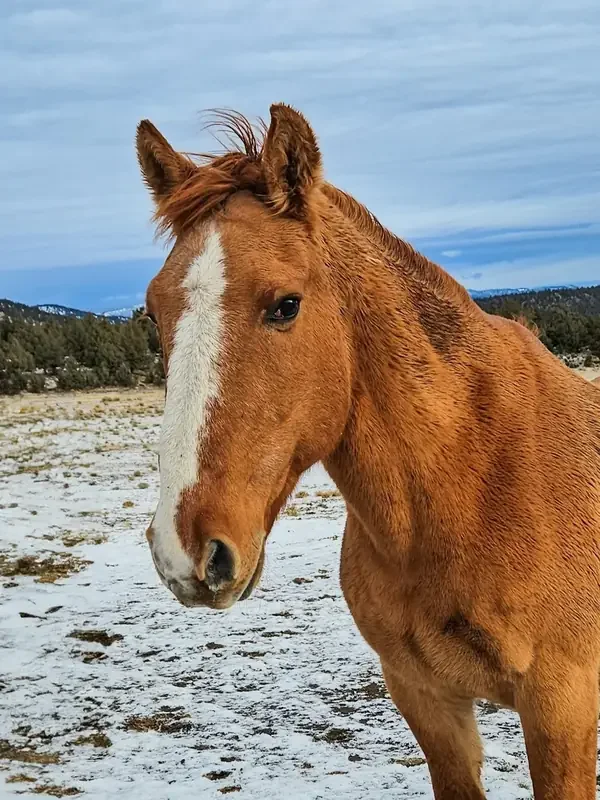
Ringo
From the beginning, Ringo carried steady strength. He formed his own herd, gathering five mares around him and offering safety and leadership like it was written into his bones. Over time, that herd integrated into Beauty’s herd. They became part of a larger family that moves together as one.
Protection looks like that too. A social world where no one stands alone.
Summer: protection is mentorship and the bonds that teach courage
Summer moves through life with steady awareness and quiet strength. She embodies the role of a mentor within her herd.
She is originally from the South Steens of Oregon. She was rounded up and placed in BLM holding corrals before being adopted by a kind woman. Eventually she made her way to Oklahoma, where she bonded with Thunder’s group and became part of the Wild Five. In August 2023, Summer and her herd traveled back to Oregon and found sanctuary here. It is a place where she can roam freely and reconnect with the rhythms of the land.
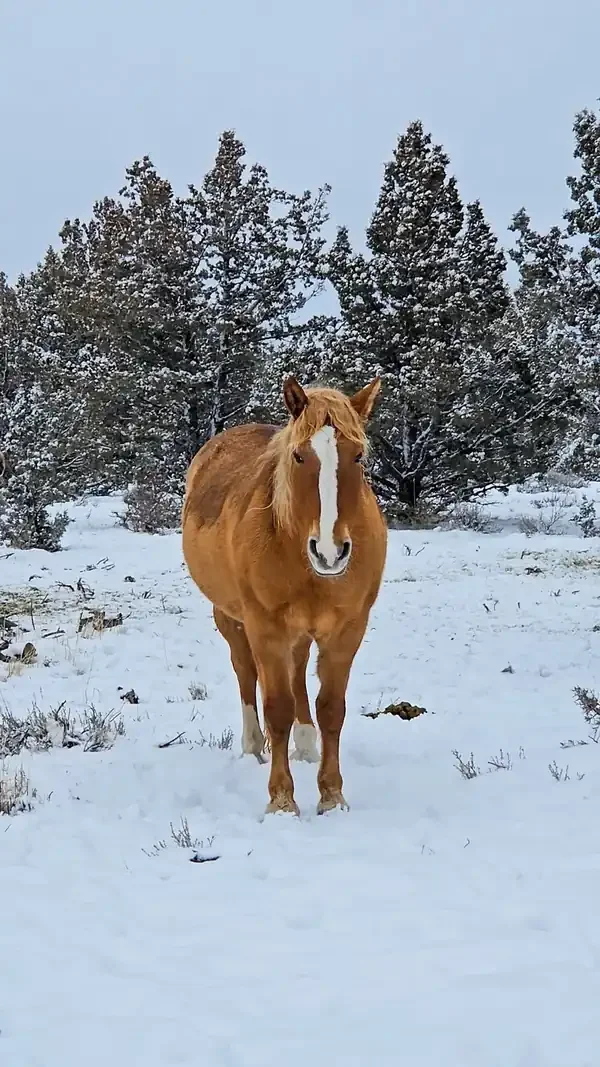
Summer
Summer has stepped into the role of guardian and guide, especially for Colibrí. We lovingly call her Colibrí’s “Auntie.” Summer is watchful yet gentle. She helps keep Colibrí safe while still giving her room to grow and explore.
If Beauty shows us how protection restores dignity, Summer shows us something else. Protection is a culture inside the herd. It is the quiet, constant care they give each other.
Cravin: protection is acting fast, then doing the long work after
Sometimes rescue is slow and deliberate. Sometimes rescue is a race against the clock.
Cravin (a mule) and Flora escaped into a remote field after being turned out to pasture from the kill pen. They remained undetected for several months. When workers finally discovered them, they were deemed too much trouble to keep. With no time to process or evaluate them, Cravin and Flora were scheduled for immediate shipment to Mexico. Two other mules were also on that list, Benson and Millie.
With less than 24 hours before departure, Retta Risley reached out to Broken Arrow. The mules were transported to safety without the usual intake inspections. The priority was simple. Get them out before they could be loaded onto a slaughter truck.
Cravin arrived at Broken Arrow Ranch & Sanctuary in August 2022.
That urgency is what many people picture when they hear “horse protection.” Sanctuary teaches a deeper truth.
Protection is not only the urgent rescue. Protection is the patient aftercare.
Why protection still matters beyond our gates (two sobering realities)
Even as sanctuaries create safety, the larger need remains.
First, U.S. horses are still exported for slaughter. Animal Welfare Institute reports that in 2024, 17,208 U.S. horses were sent to Mexico and 2,993 were sent to Canada for slaughter (total 20,201).
Second, many horses entering the welfare system are not “rescued from a dramatic situation.” They are surrendered. The Equine Welfare Data Collective reports that, similar to previous years, over 50% of equines entering shelters are surrendered directly by owners in need.
Those two facts can feel heavy. They are also part of why “protection after rescue” matters so much. It is how a horse’s story stops repeating itself.
A ray of hope (because it is working)
Hope is not a feeling we manufacture here. It is something we witness.
Nationally, adoption and rehoming pathways are real and growing. In its 2024 annual report, the ASPCA notes that through myrighthorse.org, it generated more than 3,950 adoption inquiries and helped partners place more than 2,600 horses.
We also see hope in the smaller numbers that never make national reports. A mare who gains 150 pounds and becomes a matriarch. A mustang who gathers a herd and offers stability. A mentor mare who keeps a youngster safe while letting her learn. A mule who makes it out with less than 24 hours to spare, then gets to discover what “safe” feels like.
What “protection after rescue” looks like day to day
National Horse Protection Day is a perfect time to name the less visible work that keeps horses safe once they are home.
1) Protection is water you can count on
Late winter into early spring can swing quickly. Mild sunny highs can become sharp cold once the sun drops. Protection looks like consistent water checks, safe access, and routines that reduce stress.
2) Protection is hooves and safe footing
Late winter in the high desert can change overnight. A mild day can turn into a hard freeze after sunset, and footing around gates, water, and feeding areas can go from fine to slick fast.
Protection here looks like regular hoof checks, staying on top of farrier scheduling, and noticing small changes in movement before they become bigger problems. It also means managing footing in high-traffic areas so the horses can move calmly and safely.
3) Protection is preventive planning
Spring is when many barns plan core wellness, including vaccines and parasite strategy.
4) Protection is trust built in “hangouts”
Some of our horses are formerly wild and now unhandled. Others had prior training, but the path that brought them to a kill pen stripped away trust and curiosity.
That is why our daily horse-human hangouts matter so much.
Because curiosity is the doorway to courage, and courage over time can become trust. We do not measure healing here by hours or training goals. We measure it in moments of consistency and connection. A horse choosing to stand closer. Choosing to stay. Choosing to exhale.
How you can help keep this promise
Every day here is built on consistency. Hay on time. Water checked twice. Hooves watched closely. Space to roam, and the patience it takes for trust to return. If this kind of protection-after-rescue matters to you, a donation helps keep it steady. It supports winter hay, veterinary and farrier care, and the quiet daily work that lets horses like Beauty, Ringo, Summer, and Cravin live without fear. 💛