

How Broken Arrow Ranch & Sanctuary Is Restoring Oregon's High Desert Habitat
At Broken Arrow Ranch and Sanctuary, caring for equines also means caring for the land that sustains them. On Oregon’s high desert, healthy habitat, healthy water systems, and healthy herds are deeply connected. That is why restoration work on the ground matters so much.
One important part of that work is taking place through the Pole Creek Restoration Project, where strategic juniper removal is helping open the landscape, improve watershed function, and support the return of native plant communities. This is careful, physical work. It is also hopeful work.
Why Juniper Removal Matters
Western juniper is native to the region, but in many areas it has expanded far beyond its historic balance. Research from Oregon State University’s ecohydrology program and the USDA Natural Resources Conservation Service has documented how western juniper encroachment can reduce available soil moisture, alter watershed function, and crowd out native grasses, shrubs, and forbs.
In sagebrush country, those changes ripple outward. Springs, creeks, and surrounding habitat can become more stressed, while wildlife and native vegetation lose the open conditions they depend on.
That is part of why restoration work in juniper-encroached landscapes matters so much. Broader USGS sagebrush restoration guidance also emphasizes the importance of rebuilding resilient sagebrush systems that can support biodiversity, watershed health, and long-term ecological recovery.
What Restoration Looks Like on the Ground
Real restoration is not abstract. It happens through skilled hands, maintained equipment, and people willing to do demanding work with purpose.
At Pole Creek, every crew member plays a role.
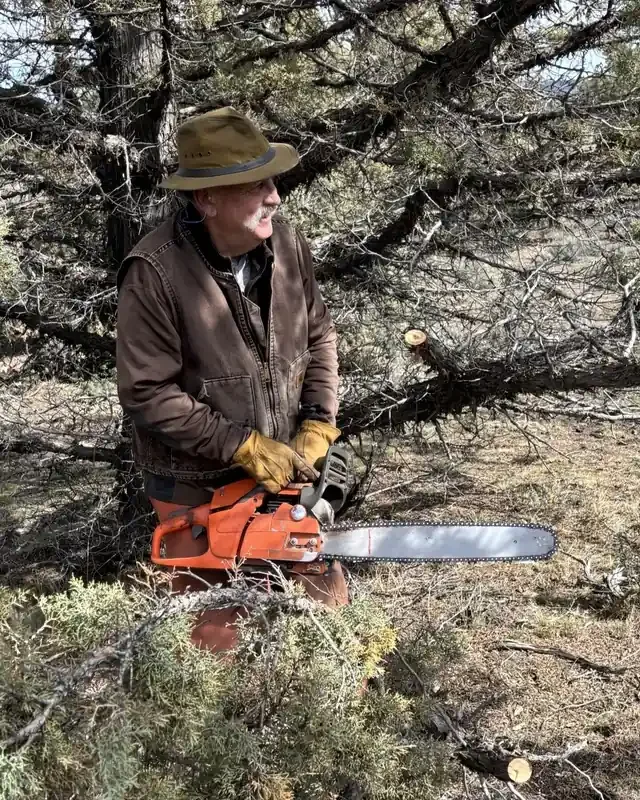
Mark is leading the project and helping make sure the work moves forward safely and thoughtfully. He is also deeply involved in limbing branches so the horses can use them for shelter. After Austin cuts a tree, Mark makes sure the remaining trunk is leveled close to the ground with no sharp edges that could injure the horses. He and Andrew also gather branches and trees into piles to be burned in the fall. It is steady, physical work that takes care, planning, and a lot of dedication.
Austin and the Bobcat A770 handle the heavy lifting that turns cutting work into visible progress across the landscape. Clearing, stacking, and opening the land back up to sky and water is essential to the process. That equipment work helps transform a crowded stand into a more open watershed with room to recover.
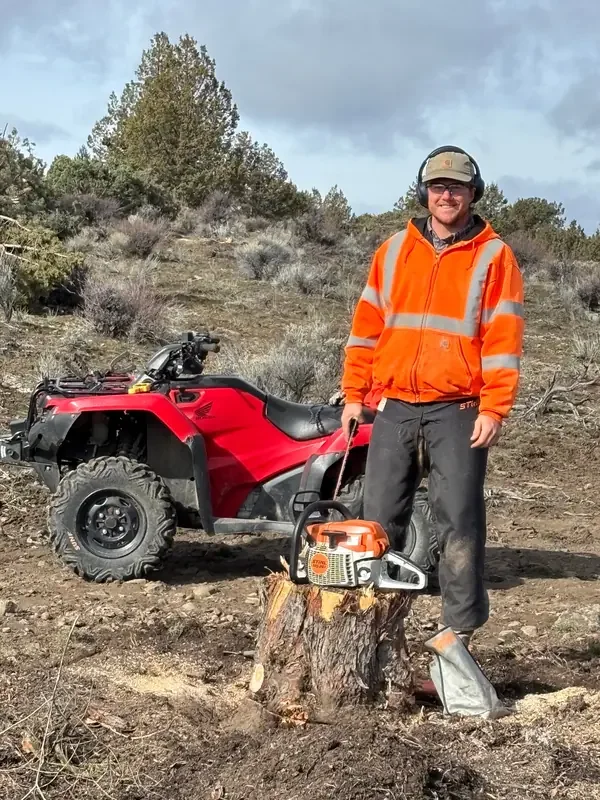
Andrew, chainsaw in hand, works tree by tree, one stump at a time. It is a powerful image of what restoration really is: consistent, intentional effort that adds up to meaningful change on the land.
This is not removal for its own sake. It is restoration with care.
Removal With Intention, Not Excess
A key part of this project is that some old-growth juniper trees are strategically left standing. These trees continue to provide shelter for horses, wildlife, and the broader living community that depends on the land.
That matters.
Thoughtful restoration is about understanding relationship, not simply clearing space. It means recognizing where juniper is degrading the watershed and where selected trees still serve an important ecological purpose. That kind of discernment reflects the deeper stewardship values behind the work.
At Broken Arrow, the goal is to support land health in a way that honors the rhythms of the high desert and the lives connected to it.
How This Connects to a Larger Regenerative Vision
The Pole Creek work fits directly into Broken Arrow Ranch and Sanctuary’s broader commitment to regenerative land stewardship.
That larger vision includes restoring native habitat across Oregon’s high desert through practices that improve soil health, support biodiversity, and strengthen ecological resilience. It also includes future use of thoughtfully managed herd movement to support healthier soils, plant regeneration, and better moisture retention across the land.
Seen that way, watershed restoration and regenerative stewardship are part of the same story. Juniper removal helps make recovery possible. Native plant regeneration, water retention, and carefully managed animal movement can help continue that healing over time.
Why This Work Matters for Horses Too
As an equine rescue and sanctuary, Broken Arrow sees every day how healing requires the right environment. Wide pastures, shelter, water, and healthy forage all matter. Restoring the land is part of creating a place where rescued horses, burros, and mules can live with dignity and peace.
It also reflects something deeper. Horses are part of the landscape, not separate from it. When we restore habitat, protect water, and support ecological resilience, we are helping create a better future for the herds in our care and for the wild and domestic lives that share this region.
One Tree, One Watershed, One Future
Restoration rarely happens all at once. It happens through many small, committed actions repeated over time.
A sharpened chain. A carefully placed cut. A machine clearing space for water and light. A hillside slowly opening back up. A watershed getting another chance.
That is what progress looks like on the ground.
At Broken Arrow Ranch and Sanctuary, we believe healing can extend beyond individual animals to the land itself. The Pole Creek Restoration Project is one example of how that healing begins.