

From Pond Days to Winter Prep: How a Central Oregon Horse Sanctuary Works With the Seasons
Nobody sent a group text, but somehow everybody showed up.
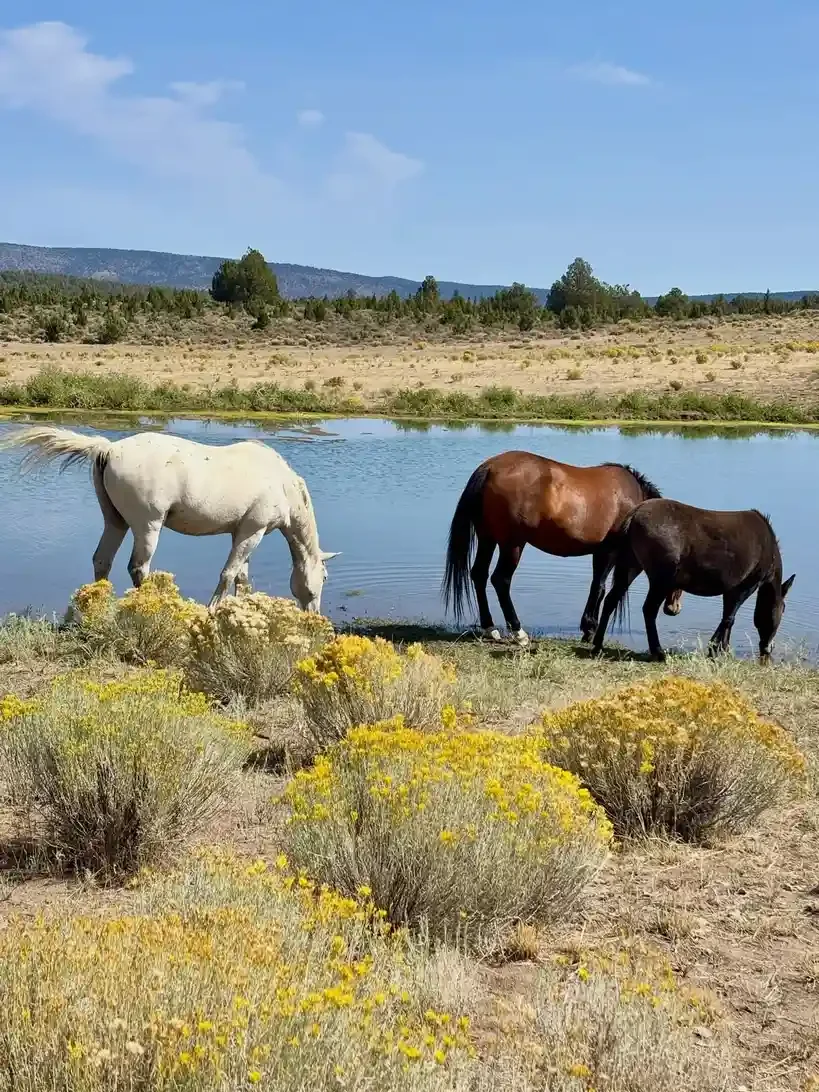
One by one, members of the herd drifted down to the pond for a midday drink. Late-summer wildflowers still lined the banks, familiar companions gathered nearby, and there was no sense of urgency anywhere in sight.
For the herd, these are some of the quietest days of the year. Behind the scenes at Broken Arrow Ranch & Sanctuary, however, late summer is already the beginning of winter preparation.
Caring for rescued horses, burros, and mules on 2,000 acres in Central Oregon means working with the rhythms of the land and the demands of each season. While the herd grazes, rests, drinks, and moves together, we are looking several months ahead.
Late Summer Has Its Own Rhythm at the Sanctuary
There is something special about this time of year at Broken Arrow. Horses gather around the ponds we created for them, wildflowers appear along the banks, and the herd settles into an easy rhythm of grazing, drinking, resting, and moving together.
Those shared moments are part of sanctuary life. There is room to wander, time to linger at the pond, and trusted companions nearby. For animals that have experienced displacement, neglect, or uncertainty, an ordinary afternoon can carry a lot of meaning.
While the Herd Slows Down, Winter Planning Speeds Up
The peaceful pace of the herd can make late summer feel almost timeless, but the ranch calendar tells a different story. The final weeks of summer are when preparation for colder weather begins in earnest.
Broken Arrow is a 501(c)(3) nonprofit dedicated to providing a forever home for rescued equines while caring thoughtfully for the land that supports them. Working ahead helps us respond to each season with a plan instead of waiting for conditions to change.
Pasture condition and seasonal growth
Winter hay supplies and feed storage
Water systems
Fencing, gates, and shelter areas
Veterinary and farrier needs
Emergency supplies and seasonal maintenance
Preparation is one of the quieter parts of sanctuary care, but it is essential to providing consistent, lifelong support.
Resting the Land Before Another Growing Season
Summer at Broken Arrow shows what thoughtful pasture management can support. Through rotational grazing, horses and mules move between areas while other pastures are given time to rest and recover. As the growing season winds down, that same principle becomes even more important.
Knowing When the Land Needs a Break
Penn State Extension explains that horses can graze plants very close to the ground and often return repeatedly to preferred areas. Rotational grazing gives grasses time to restore the energy reserves needed for regrowth and helps protect productive pasture over time.
For Broken Arrow, seasonal pasture rest is part of a larger commitment to healthy soil, resilient vegetation, and a landscape that can continue supporting the herd in the years ahead.
From Green Pastures to Winter Hay
As pasture growth slows, hay takes on a larger role. Preparing for winter means estimating forage needs, storing hay properly, and making sure individual animals receive the nutrition that fits their age, body condition, and health history.
Some rescued equines are seniors. Others arrived with a history of poor nutrition or need additional supplements and closer monitoring. A healthy-looking winter coat can also make changes in body condition harder to spot, which is why hands-on observation remains important throughout the colder months.
University of Minnesota Extension recommends regular body-condition checks and notes that horses may need additional hay during extreme cold. Forage digestion helps produce heat, making good-quality hay an important part of winter management.
A full hay barn represents more than stacked bales. It represents weeks and months of security for animals who now have a permanent home.
Water Matters in Every Season
The ponds are an obvious favorite during warm weather. We built them so our rescued equines would have places to drink, cool down, and enjoy the landscape around them. On a late-summer afternoon, a group gathered along the water can feel like the perfect picture of sanctuary life.
As temperatures fall, dependable water access remains just as important. University of Minnesota Extension notes that most 1,000-pound adult horses need at least 10 to 12 gallons of water each day and recommends encouraging winter water intake to help reduce the risk of dehydration and colic.
That means the work behind those peaceful pond scenes continues long after summer ends.
The Herd Still Sets Its Own Pace
While we prepare for the next season, the horses, burros, and mules continue doing what equines do. They graze together, groom trusted companions, follow one another across the property, rest, roll, drink, and communicate through movement and body language.
Sometimes it is a few herd members deciding that everyone should head toward the pond. Sometimes it is a pair of friends taking turns scratching hard-to-reach spots. Sometimes Jupiter gives us a snort full of personality before heading back to the group.
These ordinary moments are exactly what the work is meant to protect: the freedom to move at an unhurried pace, stay connected to companions, and simply be an equine.
Sanctuary Means Preparing Before Something Is Needed
Providing a forever home means caring for the herd on beautiful summer afternoons and preparing for harder weather long before it arrives.
The American Association of Equine Practitioners emphasizes that equids need appropriate food, water, health care, an environment suited to their biology and behavior, and protection from severe weather. At a sanctuary, meeting those needs requires year-round planning, infrastructure, and daily care.
Winter readiness can include hay, dependable water, shelter, fencing, land management, veterinary and farrier care, equipment, and emergency reserves. Each piece helps create the stability the herd depends on.
Small Community Support Becomes Part of Something Bigger
Support for the sanctuary comes in many forms. At Blissful Heart Wellness Center, visitors can shop Broken Arrow's farm stand and self-service boutique, including freshly baked goods, handcrafted beef tallow soaps, medicinal teas, herbs, and other offerings. Proceeds help support the rescued mustangs.
A purchase may feel small in the moment, but community support becomes part of something much larger. It helps provide feed, care for the land, maintain sanctuary infrastructure, and give the herd a safe home through every season.
Working With Nature, One Season at a Time
Soon, late-summer pond days will give way to cooler mornings. Pasture growth will slow, winter coats will thicken, hay will take on a larger role, and water systems and shelters will face different demands.
The landscape changes, and Broken Arrow changes with it. We care for the animals, care for the land beneath their feet, and prepare today for what they will need tomorrow.
Frequently Asked Questions
Why does Broken Arrow begin preparing for winter before cold weather arrives?
Preparing early gives the sanctuary time to secure hay, evaluate pasture conditions, inspect infrastructure, plan individual feeding needs, and address maintenance before winter weather makes those tasks more difficult.
Why are pastures rested as the growing season slows?
Giving grazed areas time to recover helps grasses rebuild energy reserves, protects desirable forage, and supports healthier pasture over time.
Do horses still need a lot of water during winter?
Yes. Horses need reliable access to clean water throughout the year. Encouraging adequate winter water intake helps reduce the risk of dehydration and digestive problems.
Why does hay become more important during colder months?
As pasture availability declines, hay becomes a primary source of forage. Digesting forage also produces heat, which helps horses maintain body temperature in cold conditions.
How can I help Broken Arrow prepare for winter?
Donations, sponsorships, farm stand purchases, and sharing Broken Arrow’s story all help support feed, water systems, fencing, land care, veterinary needs, and the everyday work of lifelong sanctuary care.
Help Us Prepare for the Season Ahead
Every peaceful afternoon by the pond is supported by work that begins long before it is needed.
Your support helps Broken Arrow Ranch & Sanctuary provide hay, dependable water, healthy land, safe infrastructure, veterinary care, and a forever home for rescued horses, burros, and mules through every season.
Sponsor an equine, make a donation, visit the Broken Arrow farm stand at Blissful Heart, or share our story with someone who believes rescued animals deserve a safe place to call home.
Sources
· Penn State Extension: Basic Pasture Management for the Equine Owner
· University of Minnesota Extension: Caring for Your Horse in the Winter
· American Association of Equine Practitioners: AAEP Principles of Equine Welfare