

Have you ever stood near a horse and felt as though they were studying you? Their ears might turn toward your voice, their eyes follow your movements, or they may quietly observe you from a distance before deciding whether to come closer.
Horses are incredibly observant animals, and scientific research is revealing just how much information they gather from the people around them. Our facial expressions, voices, and even body odors can provide clues about our emotional state, often without us realizing how much we're communicating.
At Broken Arrow Ranch & Sanctuary in Central Oregon, we see the individuality of our rescued horses every day. Some are naturally curious about people, while others take a more cautious approach. Understanding how horses perceive human behavior helps us appreciate these differences and the patience involved in building relationships with animals whose histories haven't always been easy.
Can Horses Really Recognize Human Emotions?
Researchers have discovered that horses can distinguish between certain human facial expressions, including happiness and anger.
In a 2016 study published in Biology Letters, researchers at the University of Sussex showed 28 horses photographs of people displaying happy and angry expressions. When viewing angry faces, the horses were more likely to look with their left eye and showed a more rapid increase in heart rate than when viewing happy faces.
The findings suggest that horses recognize emotional differences in human expressions and may respond to negative signals with heightened alertness.
This sensitivity makes sense when we consider how horses evolved. As prey animals, their survival has long depended on being aware of subtle changes in their surroundings, including the behavior of other animals.
Meet Bree, One of Our More Sensitive Souls
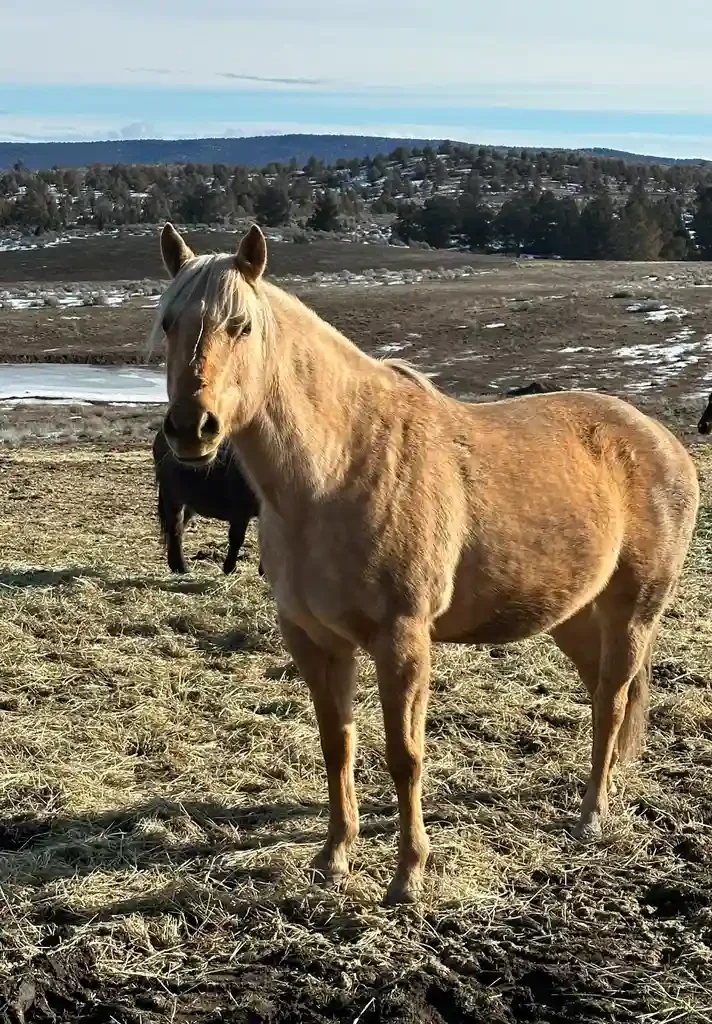
Our quarter horse mare Bree offers a wonderful example of why every horse needs an individual approach.
When Bree arrived at Broken Arrow in June 2022, she was severely underweight and had experienced considerable hardship. Through carefully managed nutrition and ongoing care, she gradually regained her physical strength, gaining more than 150 pounds.
Her comfort around people has developed at a different pace. Bree remains hand-shy, although she has begun allowing touch during quiet moments when she feels comfortable.
Those small moments are meaningful to us because they happen on her terms. We pay attention to her responses and give her room to approach interactions at her own pace.
Research into equine emotional awareness helps explain why our behavior around horses warrants so much attention, particularly when an animal is still learning to feel comfortable in human company.
Horses Can Remember Human Facial Expressions
One of the more fascinating discoveries involves horses' ability to remember emotional expressions associated with individual people.
A 2018 study published in Current Biology showed horses photographs of people displaying happy or angry expressions. Several hours later, the animals encountered those same individuals in person, this time wearing neutral expressions.
The horses responded differently depending on which expression they had previously seen, suggesting that they remembered the emotional information associated with each person.
Think about what that could mean for everyday horse-human interactions. A horse may retain information from an encounter and use it when evaluating that person later, even when the original expression is no longer visible.
Researchers are still exploring how these abilities influence longer-term relationships, but the findings offer a compelling reason to approach horses with consistency, patience, and an awareness of their individual comfort levels.
Black Beauty Has Her Own Way of Building Trust
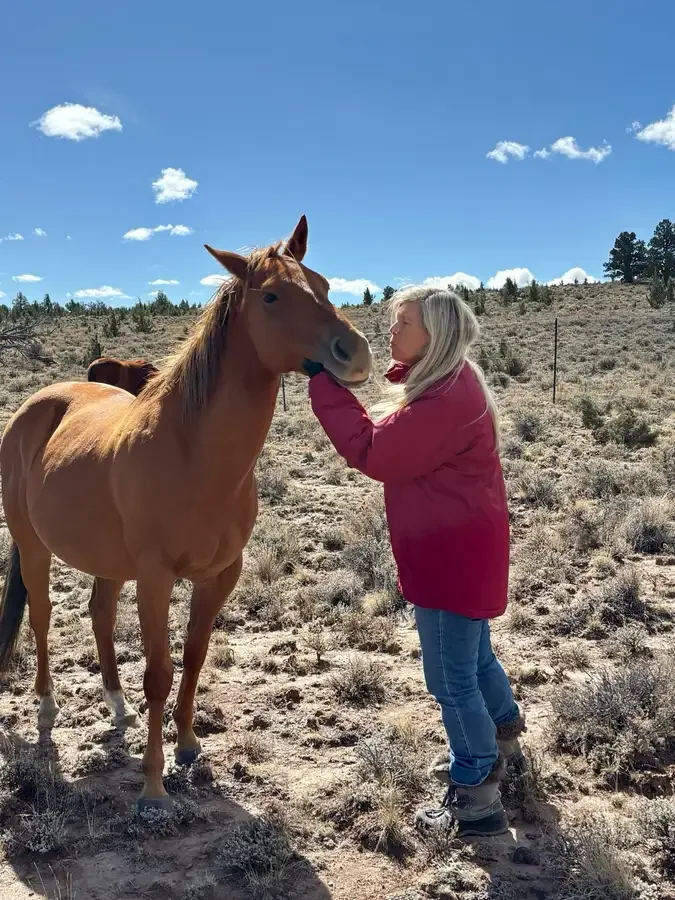
Our mustang mare Black Beauty arrived at Broken Arrow on the summer solstice of 2022 with her young colt, Jupiter, after being rescued from an Oklahoma kill pen.
She was frightened, dangerously underweight, and understandably cautious in her new surroundings. Over time, she regained her strength and became the matriarch of her herd, a role she continues to hold with confidence.
Beauty still prefers to maintain some distance from people, although the sanctuary team has documented occasions when she voluntarily approaches during essential oil sessions.
We find her willingness to initiate those moments especially encouraging. She can remain a confident herd leader while deciding when she feels comfortable being near humans.
Beauty's story reminds us that each horse brings a different history to the sanctuary, and positive interactions develop through an ongoing understanding of the individual animal.
Horses Pay Attention to Our Voices, Too
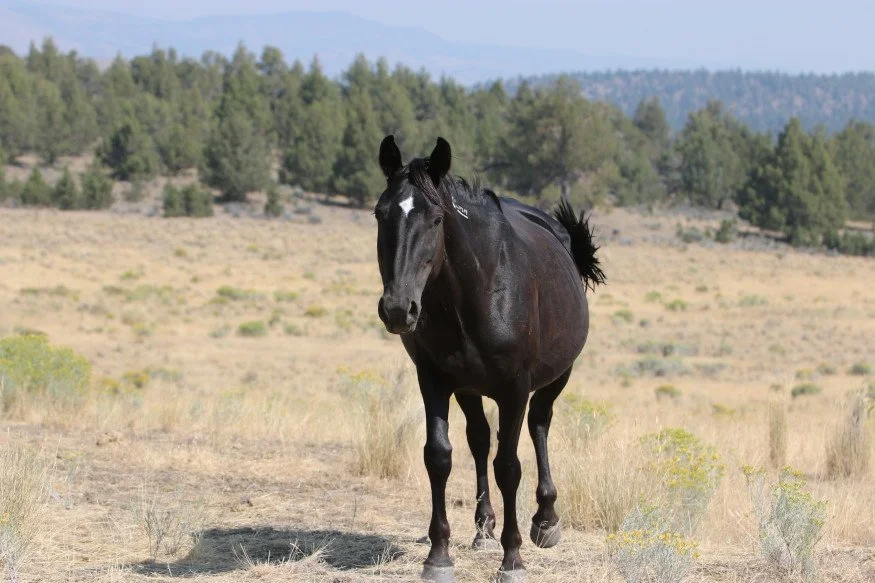
Facial expressions are only part of the story. Horses also respond to human vocal sounds, and research suggests they can connect information received through different senses.
In a 2019 study published in Animals, researchers presented horses with images of happy and angry human faces while playing vocal sounds expressing those emotions.
The horses spent more time looking at faces that did not match the sounds they heard. They also showed different behavioral and heart-rate responses to angry and happy vocalizations.
These findings suggest that horses can recognize relationships between emotional information they see and hear.
Anyone who spends time around horses knows that an interaction involves much more than spoken instructions. The sound of a voice, a person's posture, the speed of their movements, and the horse's previous experiences can all influence how an encounter unfolds.
At Broken Arrow, Shiloh offers another interesting example of an individual personality. One of the sanctuary's first residents, this mustang gelding initially moved cautiously through his new surroundings. He eventually developed strong relationships within the herd and became a steady, watchful presence among his companions.
His story reflects how different horses respond to new environments and relationships in their own ways. The research gives us another perspective on the sensitivity and awareness that equines bring to their daily lives.
Can Horses Actually Smell Fear?
You may have heard that horses can smell fear. There's some fascinating science behind that familiar saying, although researchers are still exploring exactly what horses understand from these chemical signals.
In a 2023 study published in Scientific Reports, researchers collected human sweat samples from people watching either a frightening movie or a comedy.
When horses were presented with odors collected during those different emotional experiences, they were able to distinguish between them.
More recently, research published in August 2026 in Applied Animal Behaviour Science provided additional evidence that horses can connect certain visual and vocal signals associated with human fear and joy.
These studies give us a glimpse into how many sources of information horses use to navigate their surroundings. Their senses are constantly gathering details that people may overlook.
The findings also encourage greater awareness of how our own behavior can become part of a horse's experience.
What These Discoveries Teach Us About Rescued Horses
Every equine at Broken Arrow arrives with a unique history. Some have experienced neglect, displacement, or difficult encounters with people, while others have simply had limited human contact.
We learn about their individual personalities through daily observation, watching how they approach new experiences, interact with their companions, and respond to the people caring for them.
With a horse like Bree, progress may mean accepting gentle touch during a quiet moment. For Beauty, it may be choosing to approach someone while remaining free to walk away.
There is no universal timeline for building trust, and we respect that each animal has its own preferences and boundaries.
Scientific discoveries about emotional recognition reinforce an approach based on patience and sensitivity. They also give us a deeper appreciation for the intelligence and awareness of the horses we care for.
A Forever Home Where Every Horse Can Be an Individual
Across 2,000 acres of Central Oregon's high desert, Broken Arrow Ranch & Sanctuary provides rescued horses, burros, and mules with a permanent home where they can live alongside their companions and express their natural behaviors.
That commitment extends throughout their lives, through changing health needs, evolving herd relationships, and the everyday work of providing appropriate care.
The more scientists discover about equine perception, the more interesting these animals become. Their responses to facial expressions, voices, and scents reveal a remarkable awareness of the world around them, while their individual personalities remind us how much there is still to learn.
And sometimes, the most rewarding part of caring for a rescued horse is watching them become comfortable enough to approach us on their own.
Frequently Asked Questions
Can horses tell when someone is happy or angry?
Research has shown that horses can distinguish between human facial expressions and vocal sounds associated with happiness and anger. Studies have also documented changes in their behavior and heart rate in response to these signals.
Can horses remember how someone treated them?
Research indicates that horses can remember emotional facial expressions associated with particular people for at least several hours. Their responses to familiar individuals can also be influenced by previous experiences and learned associations.
Can horses smell human fear?
Studies suggest that horses can distinguish between human body odors produced during fearful and joyful experiences, although scientists are still investigating how horses interpret these chemical signals.
How can people build trust with a rescued horse?
Patience, consistent handling, awareness of body language, and respect for individual boundaries can help support positive interactions. Horses have different temperaments and experiences, so their comfort around people develops at different rates.
Help Us Give Rescued Horses a Home for Life
Our rescued horses have taught us a great deal about patience, individuality, and the joy of watching confidence grow over time.
At Broken Arrow Ranch & Sanctuary, we're committed to providing lifelong care and a permanent home where each equine can live comfortably, maintain relationships with companions, and experience the freedom of being a horse.
With your support, we can continue caring for these remarkable animals and the land they call home.
Sources
Smith et al. (2016), Biology Letters — facial expressions
https://pmc.ncbi.nlm.nih.gov/articles/PMC4780548/
Proops et al. (2018), Current Biology — emotional memory
https://pubmed.ncbi.nlm.nih.gov/29706519/
Trösch et al. (2019), Animals — facial and vocal cues
https://pmc.ncbi.nlm.nih.gov/articles/PMC6912773/
Jardat et al. (2023), Scientific Reports — human body odors
https://www.nature.com/articles/s41598-023-30119-8
Jardat et al. (2026), Applied Animal Behaviour Science — fear and joy
https://www.sciencedirect.com/science/article/pii/S0168159126001139